This course introduces the foundational concepts of epidemiology, focusing on the study of disease distribution and determinants in populations. The quiz covers key historical figures, core principles, and critical frameworks in epidemiology.
Key Topics Covered:
Historical Figures in Epidemiology:
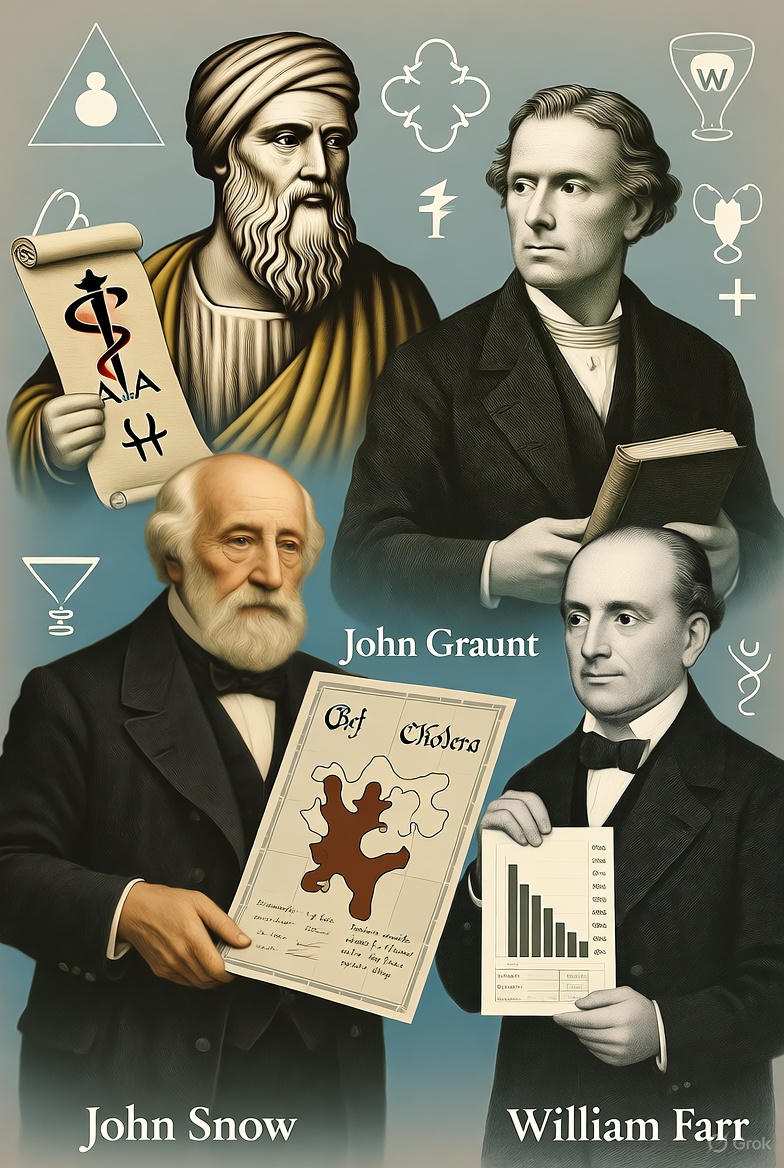
- John Snow, the "Father of Field Epidemiology," known for his work on cholera.
- Hippocrates, author of On Airs, Waters, and Places, emphasizing environmental influences on health.
- John Graunt, who analyzed mortality data in 1662, laying groundwork for quantitative epidemiology.
- William Farr, the father of modern vital statistics, advanced data-driven public health.
Core Concepts:
- Epidemiology focuses on community health and disease distribution, primarily using a quantitative approach.
- The epidemiologic triangle (host, agent, environment) explains disease causation.
- Key terms include risk factors (determinants influencing disease), causes, and the spectrum of disease (ranging from mild to fatal).
Natural History of Disease:
- The incubation period (time between exposure and symptom onset) applies to infectious diseases.
- The latency period is relevant for chronic diseases.
Prevention Strategies:
- Primary prevention: Prevents disease before it occurs (e.g., immunization).
- Secondary prevention: Involves early detection and treatment (e.g., cancer screening).
- Tertiary prevention: Focuses on rehabilitation post-disease (e.g., stroke rehabilitation).
Disease Transmission:
- Communicable diseases (e.g., tuberculosis) and zoonotic diseases (e.g., rabies) are explored.
- The chain of infection consists of six links, including reservoir, portal of exit, and mode of transmission.
- Transmission modes include direct (e.g., kissing), vector-borne (e.g., malaria via Anopheles mosquito), airborne (e.g., tuberculosis), and transplacental (mother to fetus).
- Biological vectors (pathogen multiplies within) differ from mechanical vectors.
Applications:
- Applied epidemiology contributed to smallpox eradication.
- Understanding reservoirs (humans, animals) and carriers (e.g., asymptomatic HIV carriers) is critical for disease control.
This course equips learners with the tools to analyze disease patterns, understand transmission dynamics, and apply prevention strategies to improve public health outcomes.